
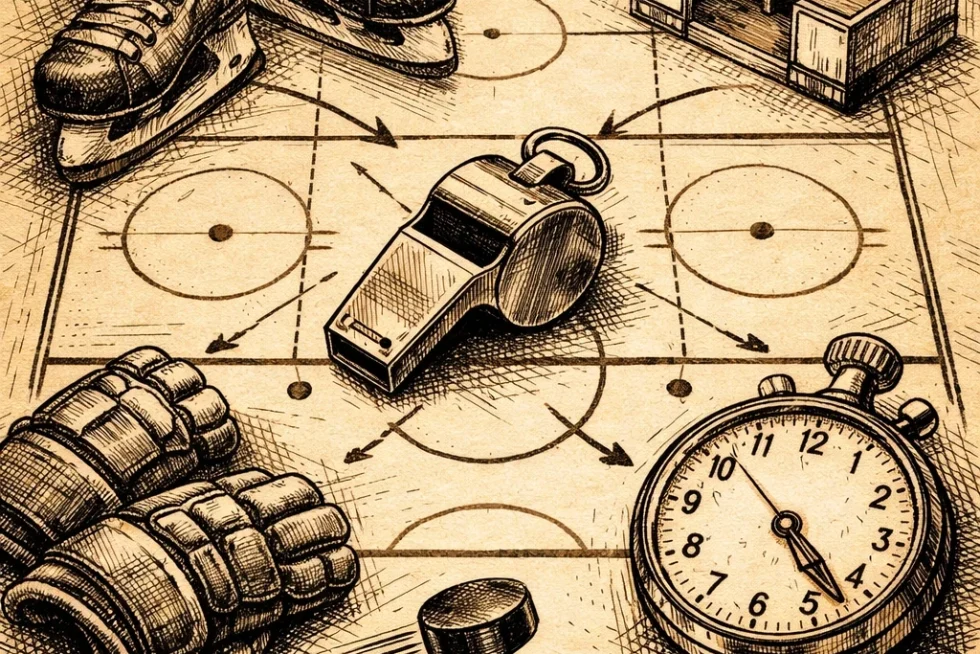
A referee’s raised arm, a whistle, and a player skating towards the penalty box can change the shape of an ice hockey game in seconds. A hockey penalty is the punishment for an infringement of the rules. In many cases, the player responsible leaves the ice for a set period, leaving their team with fewer skaters and giving the opposition a numerical advantage.
The key to following a call is to separate two questions: what action caused the penalty, and what category of penalty was assessed? A trip, hook or illegal check describes the action. Minor, major and misconduct penalties describe the consequence. Once those are clear, the on-ice situation becomes much easier to read.
What a Hockey Penalty Means
Ice hockey penalties address actions that break the rules, from impeding an opponent to dangerous contact or serious unsportsmanlike conduct. The referee identifies the infringement and applies the relevant penalty category. Often, that means the offending player goes to the penalty box for a specified amount of time.
That removal matters because a player serving a penalty is not available to take their usual shift. Their team may have to defend with fewer skaters while the other side attacks with an advantage. Not every penalty produces the same result, though. Some penalties are served by an individual, some are charged to the team, and some remove a player from the game altogether.
For a viewer, the announcement is the first useful clue. The official may state both the infraction and the duration: for example, a minor penalty for tripping or a major for a more serious incident. The infraction explains why play was stopped; the category tells you what happens next.
Hockey Penalty Types at a Glance
A minor penalty lasts two minutes. The offending player goes to the penalty box and the team will usually play short-handed while that time is being served. Many familiar calls fall into this category, including boarding, charging, elbowing, high-sticking, holding, hooking, roughing and tripping.
A bench minor is also two minutes, but it is assessed to the team rather than to one specific player. A skater who was on the ice when the infraction occurred can serve the time in the penalty box. The practical effect is still a temporary reduction in the team’s on-ice strength.
A major penalty is a five-minute penalty. The offending player serves the full five minutes in the box, even if the opposing team scores during that period. That makes a major particularly significant: the short-handed side must manage the full stretch rather than simply waiting for the first goal against to change the situation.
A misconduct penalty lasts 10 minutes. The player must sit in the penalty box but is not ejected from the game. Where the misconduct follows an initial infraction, a teammate serves the time assessed for that initial infraction, so the game can still involve a short-handed phase while the penalised player remains unavailable.
A game misconduct ejects a player or team official from the game and sends them to the dressing room. The player may be substituted on the ice immediately. The ejection itself should not be confused with every other penalty that may be assessed as part of the same stoppage; the immediate point is that the ejected person cannot return.
A match penalty also ejects the offending player. In this case, a teammate serves the time assessed for the penalty. That distinction is worth watching for: the player is gone, but the team may still have a skater in the penalty box serving the on-ice consequence.
Gross misconduct was a category associated with extreme unsportsmanlike conduct, but it has been removed from the NHL rulebook. Older discussions of hockey penalties may still refer to it, which can make it sound like a current NHL option when it is not.
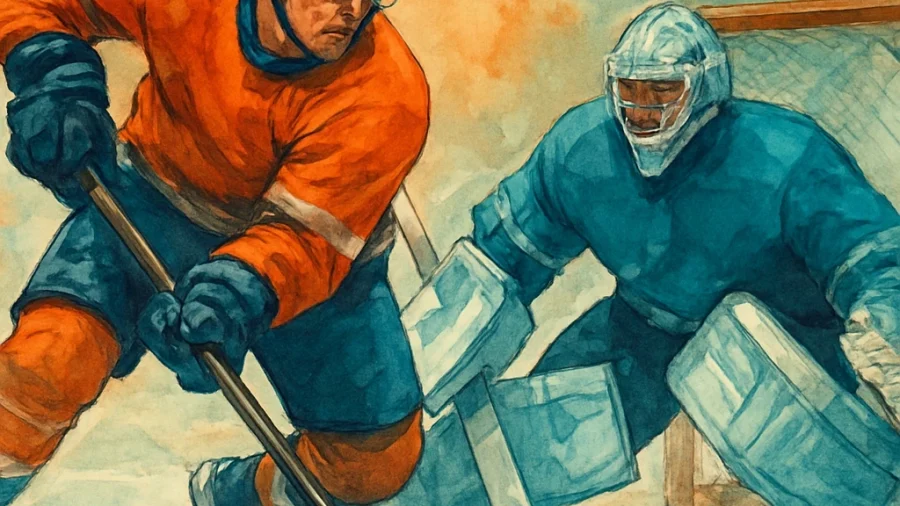
A penalty shot works differently from a timed penalty. It is an alternative sanction that can be awarded instead of a minor penalty in specified situations. Rather than putting the team short-handed, the fouled player receives a one-on-one scoring opportunity against the goaltender.
How a Penalty Changes the Game
The most immediate consequence of a player-serving penalty is a power play for the non-offending team. One side has an extra skater available while the other is short-handed, often changing both teams’ approach. The attacking side can keep possession and create shooting lanes; the defending side has to protect space and clear the puck when it can.
A team becomes short-handed when one or more of its players are serving penalties in the penalty box. The effect is not always tied simply to the player who committed the act. A bench minor is served by a teammate because the penalty belongs to the team, while a goaltender’s penalty time is also served by a teammate rather than by the goaltender.
Player removal and team strength are related but not identical. A game misconduct removes a player from the contest, yet that player may be replaced on the ice. A misconduct keeps the player out for 10 minutes without ejecting them, while a teammate serves the time attached to the original infraction. A match penalty removes the player and requires a teammate to serve the assessed time.
Major penalties have a particularly clear on-ice consequence: the full five minutes must be served regardless of how many goals the opposing team scores. That is why a major can create a sustained period of pressure rather than a brief momentum swing.
Common Hockey Infractions to Recognise
The name of a penalty usually describes the action the official believes occurred. Some calls concern body contact, others involve the stick, and others cover restraining or obstructing an opponent. The same broad category can be assessed differently depending on the circumstances, but these are the calls a newer viewer is most likely to hear.
Boarding involves an action that throws an opponent violently into the boards. The referee signals boarding by pounding a closed fist into the open palm of the other hand. Because players close to the boards have limited room to absorb contact or avoid it, this call is one of the clearest examples of why the location and force of a check matter.
Charging is called when a player takes three or more strides before checking an opponent. The signal is made by rotating clenched fists in front of the chest. The idea is not that all body contact is prohibited; hockey permits checking in many situations. Charging focuses on the added run-up before the contact.
Cross-checking is called when a player hits an opponent with both hands on the stick and no part of the stick on the ice. The referee uses a forward-and-backward motion with the fists to indicate the call. It is a useful signal to recognise because it often occurs in contested areas of the rink, where players are battling for position.
Elbowing is called for using an elbow to impede an opponent. The official indicates it by tapping an elbow with the opposite hand. As with other contact penalties, the call is about the manner of the contact, not simply the fact that two players collided.
Several other common calls are often announced in quick succession during a game:
High-sticking can result in a minor penalty, as can holding, hooking, roughing and tripping. High-sticking concerns an illegal use of the stick; holding and hooking concern restricting an opponent; roughing concerns unnecessary physical confrontation; and tripping is the familiar call for bringing or causing an opponent to fall. These labels help identify the type of play that drew the whistle, even when the incident happens away from the puck.
Interference and cross-checking are also common penalty calls. Interference concerns improper obstruction of an opponent, while cross-checking refers to the prohibited stick contact described above. In a fast game, the referee’s signal can be the quickest way to identify the call before the announcement is heard.
The most useful habit is to watch the official immediately after the whistle. A raised arm may indicate a delayed call before play stops; after the stoppage, the referee’s hand signal helps explain the infringement. The penalty category then tells you whether the result is a short-handed situation, a player’s temporary removal, an ejection, or a penalty shot.
What Happens on a Delayed Penalty
A delayed penalty begins when an official sees an infringement but does not stop play immediately. The official raises an arm to show that a penalty has occurred. This lets the non-offending team continue its attacking opportunity rather than losing possession because it was fouled.
Play continues while the non-offending team retains possession of the puck. That can create a visibly unusual sequence: players may keep pressing in the offensive zone while the referee skates with one arm raised. The team expecting a power play has an incentive to maintain control and look for a scoring chance before the whistle.
The stoppage comes when the offending team gains control of the puck, or when play stops normally for another reason. The penalty is then announced and enforced. The important point is that the raised arm is not a signal that the game has been forgotten or that the infraction has been waived. It is a signal that the call is pending while the non-offending side has the puck.
For a viewer, possession is the detail to track. If the team that committed the infraction does not touch the puck, the action can continue. Once it gains control, the whistle follows and the penalty sequence begins.
When a Penalty Shot Is Awarded
- An illegal act denies a clear chance. A penalty shot may be awarded when a puck carrier with a clear breakaway path is illegally impeded. One described situation involves a player who has the puck, is impeded from behind, and has no opponent between them and the goal except the goaltender.
- The player takes a one-on-one attempt. The penalty shot is a free shot by the player against only the goaltender. Unlike a conventional power play, it is a single immediate opportunity rather than a timed period with an extra skater.
- The result resolves the sanction. Whether the attempt succeeds or fails, the offending team receives no further penalty from the penalty shot itself. A goal counts as the outcome of the chance; a save or missed attempt ends that opportunity without a follow-up time penalty.
In practical terms, a penalty shot recognises that an illegal action prevented a potentially high-quality scoring chance. It restores a direct chance against the goaltender instead of sending a player to serve a minor penalty.
Short-Handed Play and Serving Penalties
Short-handed play begins when a team has one or more players serving penalties in the box. The opposing side then has a power play. A team is not required to play more than two players below full strength: if a third penalty is called, it is suspended until the first penalty expires.
This limit keeps the on-ice imbalance from becoming larger than two players. It also explains why several penalties can be announced at one stoppage without every penalised player immediately changing the number of skaters on the ice.
Goaltenders do not serve their own penalty-box time. If a goaltender is assessed a penalty, a teammate serves it instead, allowing the team to keep its goaltender in net while still absorbing the short-handed consequence.